朗读者
PLA Southern Theater Command tracks, monitors and warns 3 Philippine aircraft after their illegal entry into Huangyan Dao airspace_我的网站

一 | 北京8月21日电 (记者 刘亮)中国消费品质量安全促进会近日批准发布了《家用和类似用途洗碗机智能分级评价规范》团体标准(以下简称“标准”)。

二 |
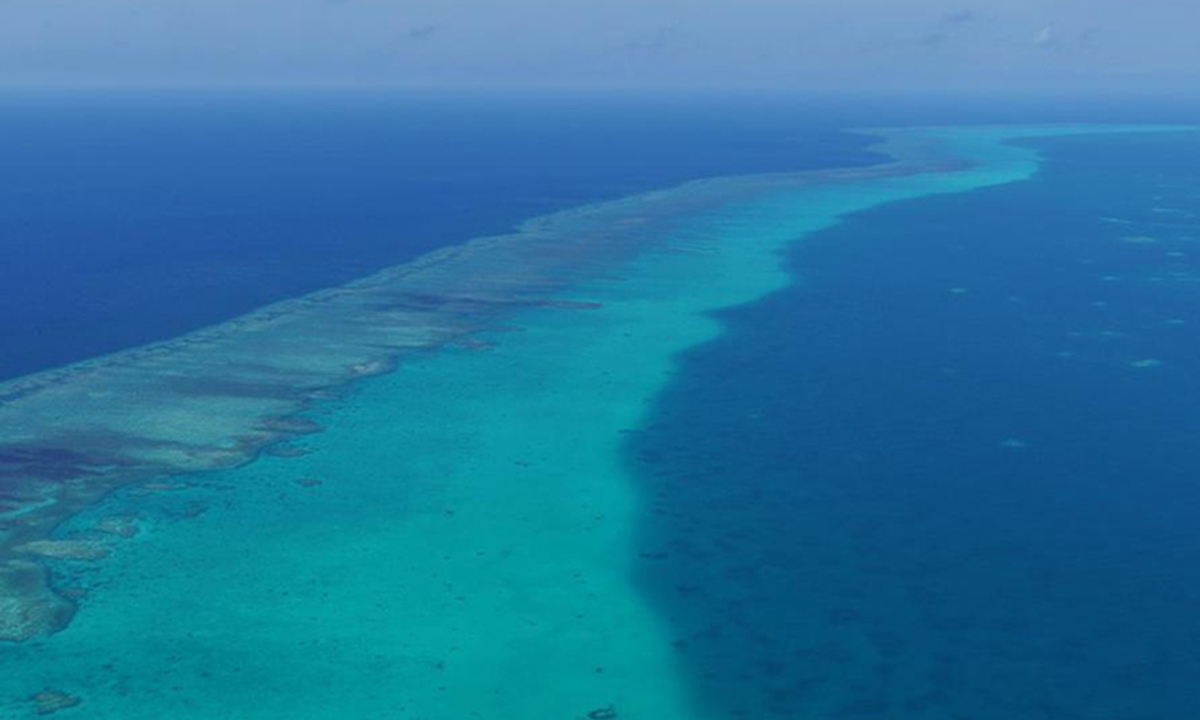
An aerial drone photo taken on May 2, 2026 shows reefs in the territorial waters of China's Huangyan Dao in the South China Sea. (Xinhua/Chen Bin)The PLA Southern Theater Command said on Friday that three Philippine aircraft illegally entered China's territorial airspace over Huangyan Dao without approval, prompting Chinese naval and air forces to track, monitor and issue verbal warnings to the aircraft.
On Friday, three small Philippine aircraft - an Islander, a C-208, and a PA-31T - illegally intruded into China's territorial airspace over Huangyan Dao without approval from the Chinese government. The naval and air forces dispatched by the PLA Southern Theater Command (STC) tracked and monitored the Philippine aircraft, and issued verbal warnings to them in accordance with laws and regulations, senior Colonel Li Jianjian, spokesperson for the PLA STC Air Force, said in a statement on Friday.
The acts of the Philippine side seriously violate China's sovereignty, and are highly likely to cause misunderstanding and miscalculation. "We sternly warn the Philippine side to stop rights-violation and provocative acts immediately. Forces of the STC remain on high alert at all times to firmly safeguard national sovereignty and security as well as regional peace and stability," said the spokesperson.
Ding Duo, director of the Research Center for International and Regional Issues at the National Institute for South China Sea Studies, called the Philippines' latest move another "stunt."
The Philippines previously submitted its so-called "territorial sea baselines" around Huangyan Dao, so it is not unexpected that Manila would follow up with actions at sea or in the air to stir up tensions, keep the issue in the spotlight and stage further provocations, said Ding.
At present, the Philippines can barely gain access to the relevant waters and has secured no tangible advantage there. Aircraft, however, can enter and leave the area quickly. Such operations not only provide material for media hype but also generate footage of China's response, allowing Manila to project resolve and reassure its military and law-enforcement forces at home, Ding told the Global Times.
In late July, the Philippines notified the United Nations of the so-called "baselines and maritime zones" surrounding Huangyan Dao. On July 31, the Chinese Foreign Ministry issued a statement on the Philippines' delimitation of the so-called "baselines of the territorial sea" around Huangyan Dao, calling the move "a grave infringement upon China's territorial sovereignty and a serious violation of international law."
"It is illegal, null and void. China firmly rejects and will never accept it," the statement said.
Meanwhile, Manila appears emboldened by growing security and defense cooperation with the US and Japan. Backed by these external partners, the Philippines has shown greater willingness to stage provocations, while its military and law-enforcement forces have displayed increasingly risk-prone and opportunistic behavior, said Ding.
China has exercised considerable restraint over the Huangyan Dao, but the Philippines should not mistake that restraint for weakness. If China were to employ the full range of available measures, Philippine aircraft would likewise be denied access to the area, said Ding.
By dispatching small aircraft for deliberate provocations, the Philippines is further increasing the risk of miscalculation. Such aerial incursions are highly unpredictable and carry serious escalation risks. If China responds with resolute or more forceful measures to defend its rights and an unintended incident occurs as a result, the Philippines should bear full responsibility for the consequences, the expert warned.
。标准构建了涵盖四大核心维度的评价指标体系,为国内洗碗机智能化能力评价提供了统一技术规范。 随着消费升级,国内市场上的洗碗机已从单一的“水洗机器”演变为集多种智能功能于一体的厨房电器,智能识污、APP远程操控、自动投放洗碗粉、智能保管等功能成为主流配置。然而,由于缺乏统一的技术评价依据,“伪智能”现象层出不穷。如部分标称具备智能识污能力的洗碗机,实际清洁效果并不佳;个别显示有智能保管功能的产品,反而导致餐具滋生异味,严重影响用户体验。 为改变这一现状,中国消费品质量安全促进会组织行业力量制定了标准。标准由中国电器科学研究院、威凯检测技术有限公司(CVC威凯)牵头,联合美的、方太、火星人等洗碗机头部企业共同起草。 标准确定的四大核心维度智能评价指标体系由智能洗涤、智能交互、智能管理和智能维护构成。其中,智能洗涤方面,标准重点考核洗碗机对餐具脏污程度的识别准确率,以及洗涤后的清洁指数、干燥指数,确保产品能够真正“洗得干净、烘得透彻”。

三 | 智能交互方面,标准对智能语音交互、联网便捷性提出明确要求,规定最快仅需两步操作即可快速完成设备联网,以大幅降低用户使用门槛。智能管理方面,标准涵盖智能保管、智能投放和自清洁三大核心能力。

四 | 智能维护方面,标准关注产品全生命周期维护能力,要求支持OTA在线固件升级等。 中国消费品质量安全促进会有关负责人表示,标准的发布实施,将引导行业从单纯的功能堆砌转向深度的体验优化,推动企业加大研发投入力度,加速产品迭代升级,提升市场竞争力。
Current article:http://kgh.nenyaogecebenliexi.shop/y7lts/hvl5.html
Published on:11:24:22